
I started this project with a pretty simple question: what actually happens to an image when you run it through a risograph printer over and over again?
Not in a theoretical way, but literally, what does it look like? What breaks first? What survives? I thus printed an image, scanned it, fed that scan back into the riso, printed again, scanned again.
Print → scan → use scan as new input → print again. Repeat.
Experiment outcome:
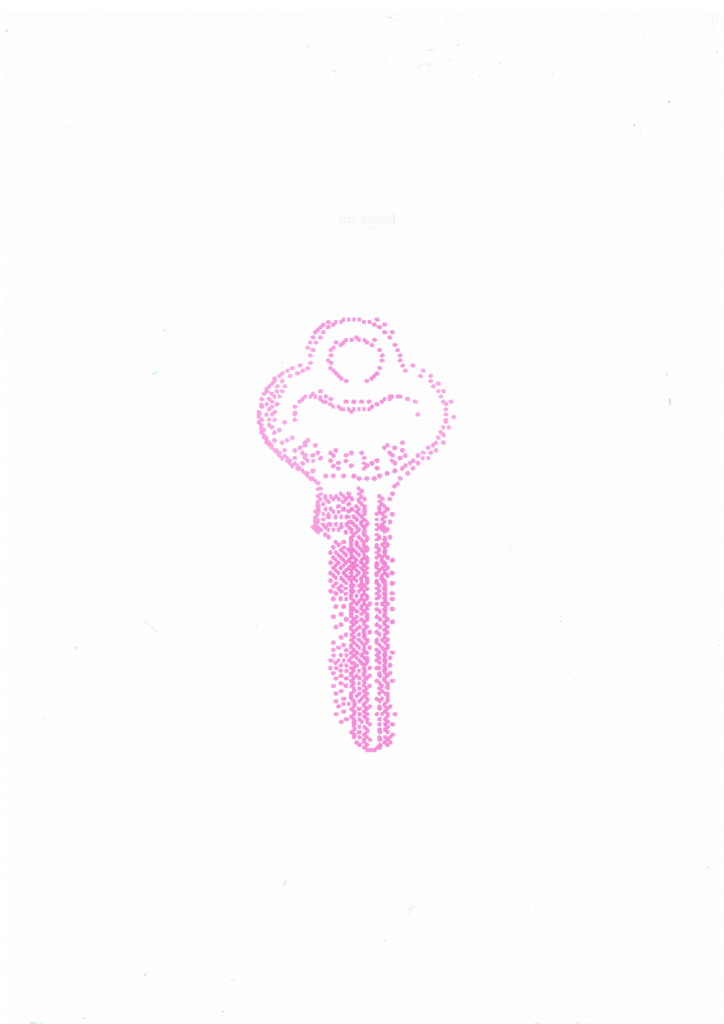
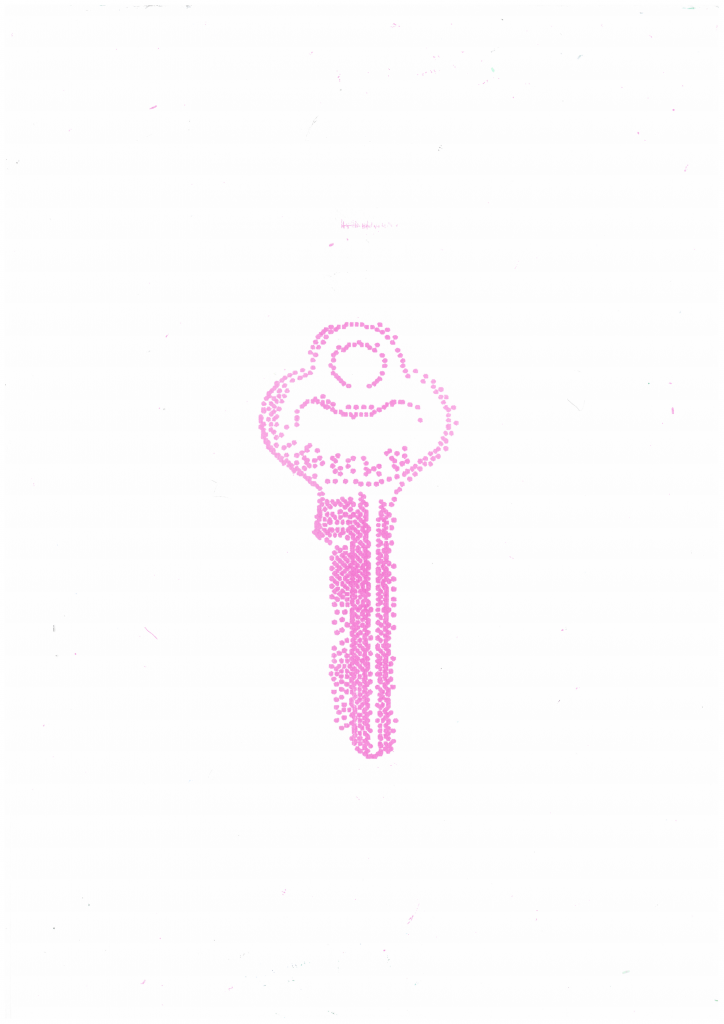
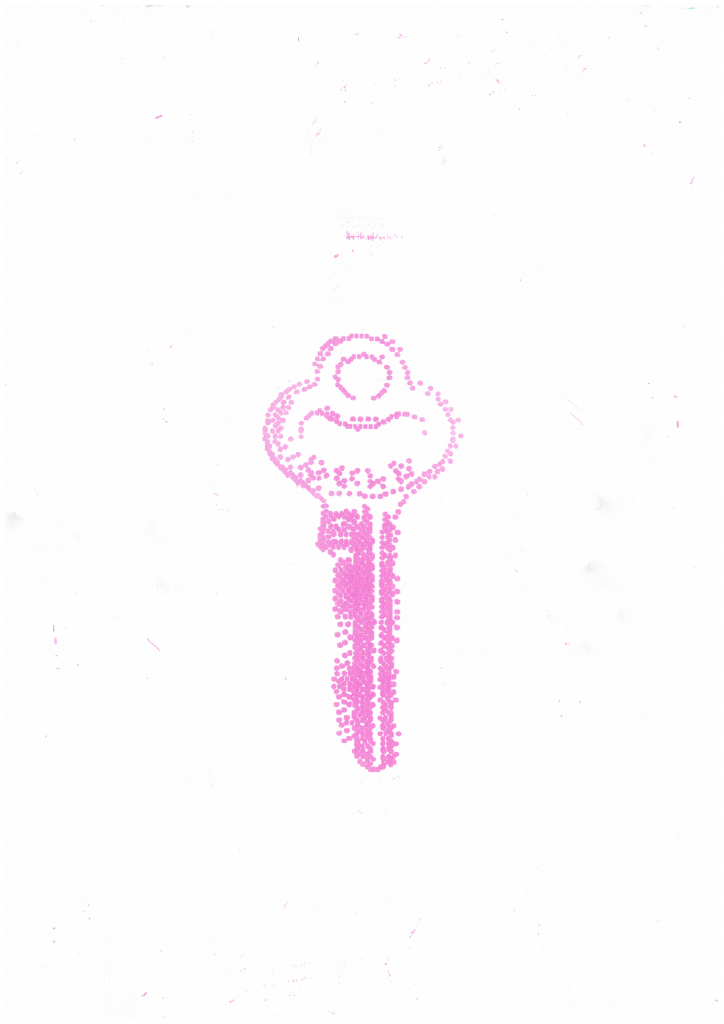
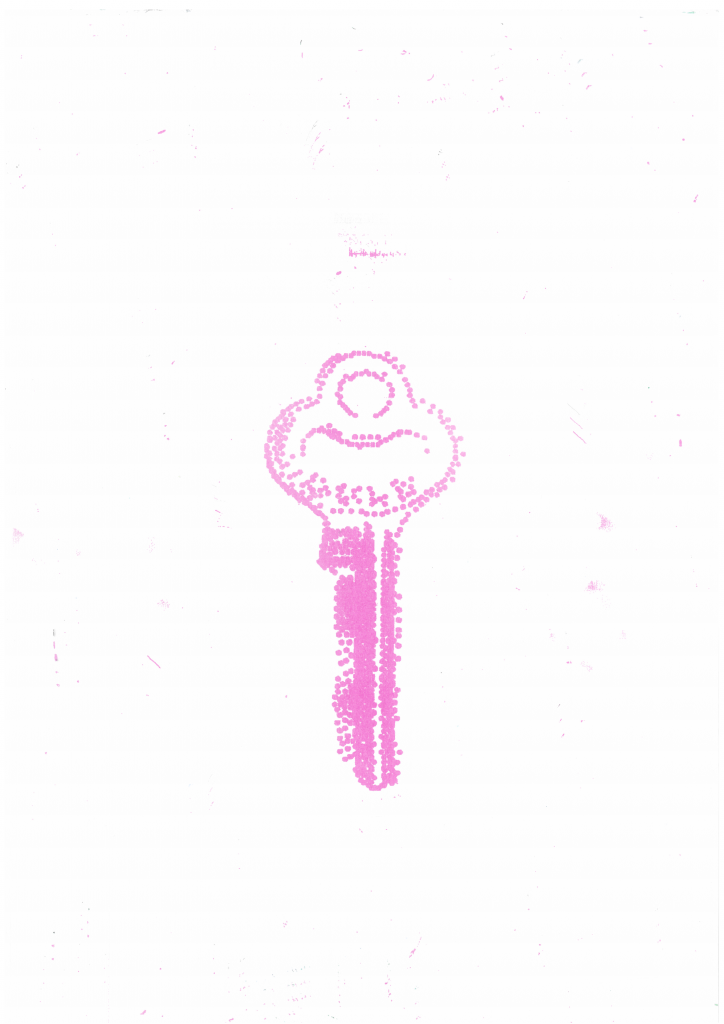
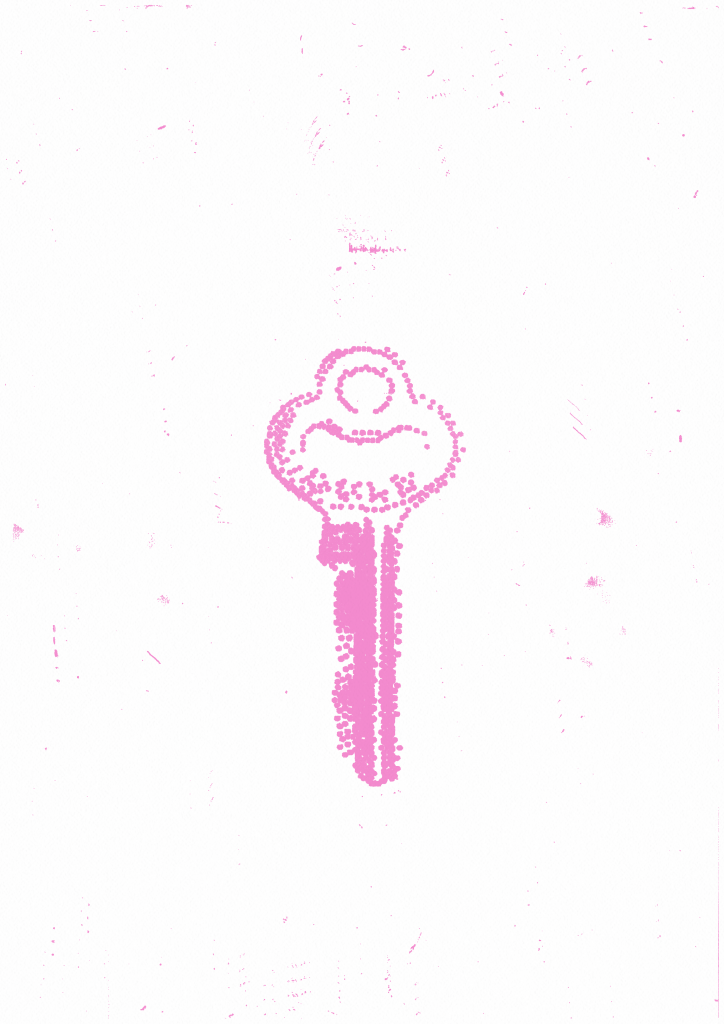
Each cycle picks up the artefacts of the last one. Riso printing already has a lot of built-in imprecision — the colour passes don’t always line up perfectly, ink sits differently depending on where you are on the paper, the dithering pattern the machine uses to simulate tones is pretty chunky up close. All of that gets baked into the scan, and then the next print is working from that slightly degraded source. By the third or fourth iteration the image is noticeably different and the key kind of turns into a blob?? i felt like i could weave in a metaphor about copying keys somewhere……
I’m still working out where the loop should stop. There’s a point where the image becomes unreadable and it just feels like a mistake rather than a process. Finding that threshold — the last iteration where it’s still doing something interesting — is kind of the main editorial decision in the whole project.
I’ve also been wondering what it would mean to run the loop with different images as starting points and see whether they degrade in similar or different ways. Whether the structure of the original image shapes the structure of the degradation. That feels like a next experiment.
I also came up with a bunch of different experiments i want to try around the theme of degradation & circulation..
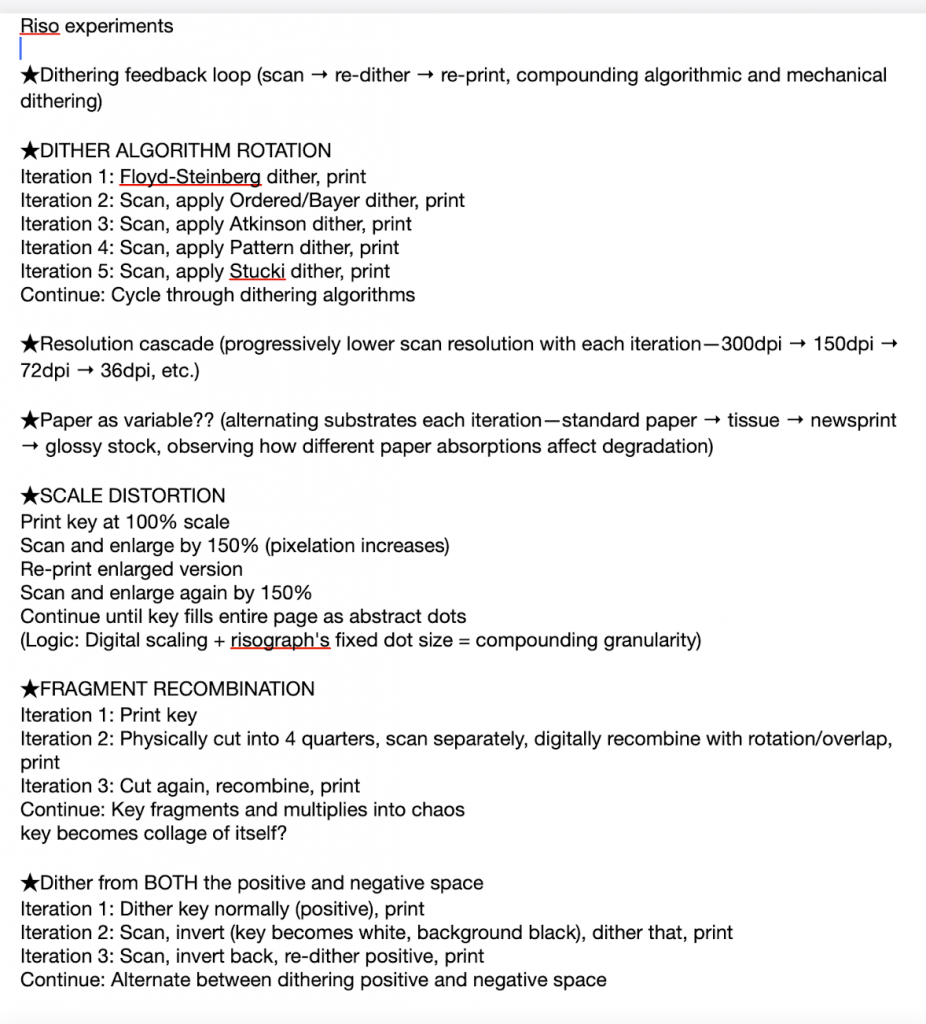
but i only had time to execute the paper as variable one because i had really wanted to try printing on tissue. below are my dithered keys printed on 18gsm, 9gsm, and 28gsm tissue in that order bcos its uploading weirdly on the blog.. : )
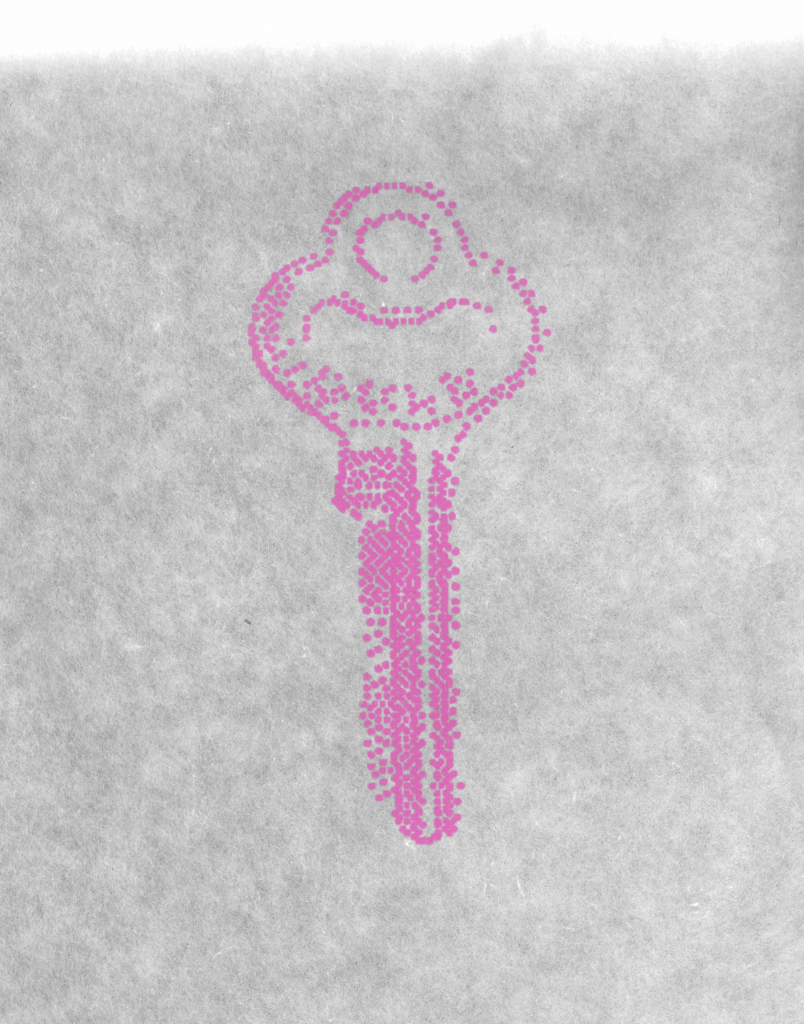
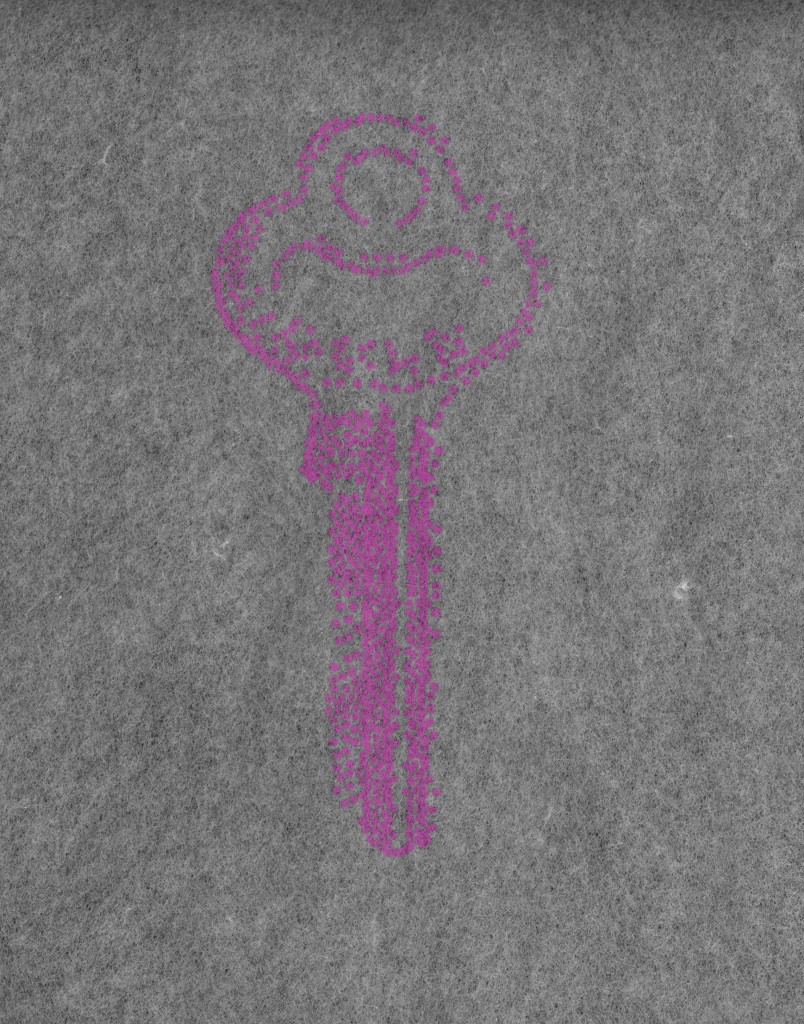
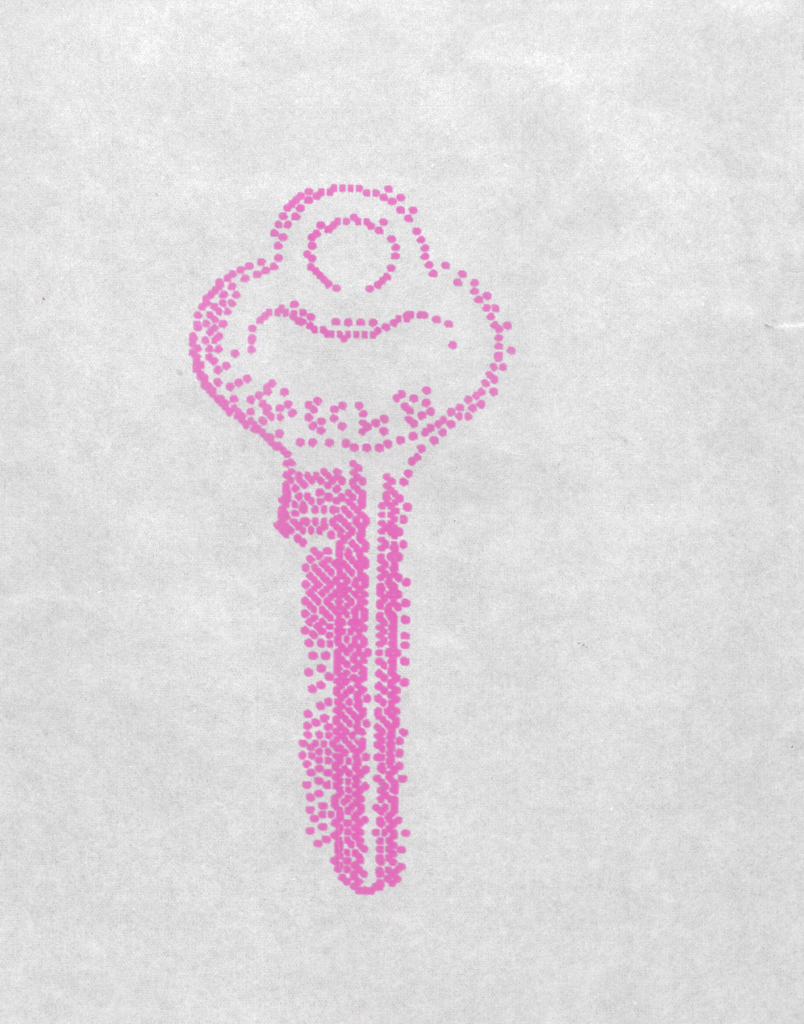
It behaves really differently — the ink bleeds into the fibres rather than sitting on top, so everything gets softer and fuzzier faster. The tissue also warps and tears slightly under the machine, which adds its own layer of unpredictability on top of the riso’s existing imprecision. And because it’s translucent, you can stack prints and see through them, which is a nice way to physically show the layering that the loop is doing conceptually.
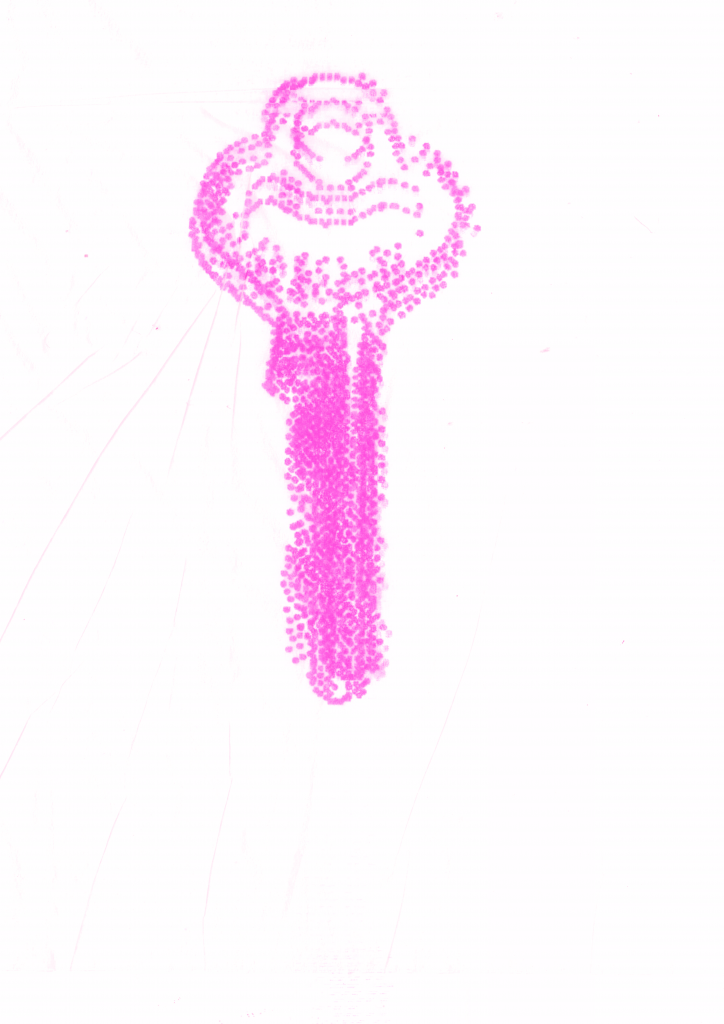
it was a useful thing to try, as it made me appreciate how much the regular paper was actually holding the image together, and how different “degradation” looks depending on what surface you’re working with.
In the spirit of Steyerl’s poor image — which lives and travels online — I wanted to add another layer of circulation by putting these experiments on a website. If the whole point is that images accumulate meaning through how they move and get handled, it felt wrong to leave them as prints sitting in a folder.
https://v0-pocket-interface-framework.vercel.app/
The website is a way of letting them circulate further. The concept was simple enough that I built it pretty quickly using v0 as a coding tool — the interface didn’t need to be complicated, and keeping it simple felt right for the work.
If I had more time, I would want to make it a proper collection of experiments to showcase on the website and have the option to compare/contrast/stack etc., rather than just the dithering feedback loop and tissue prints — other substrates, other starting images, and follow through with all the different experiments i had listed out. There are a lot of directions this could go!!
Leave a Reply