20 jan 2026.
This week was my first time using the Risograph printer. I decided to copy one of Ancco’s illustrations as a way of understanding how her images are constructed, especially her use of layered colour and emotional tone.
I underestimated how tedious the process would be.
(,,•᷄ࡇ•᷅ ,,)?
Before you even get near the machine, you have to manually separate the colours. Every layer needs to be isolated as a grayscale file, carefully considering what will print in each ink. Because the Riso prints one colour at a time, you are essentially building the image through stacked transparencies. It is deliberate and oddly unforgiving!! . At first, it felt almost absurdly slow. I remember sitting there thinking: why am I doing all of this… why don’t I just make a screenprint instead?
I think what frustrated me most was the loss of immediacy. I’m used to drawing in a fluid, instinctive way. Separating colours forced me to slow down and make decisions I would normally make intuitively. It turned colour into infrastructure. The separation process made me hyper-aware of how constructed colour actually is. What appears effortless in Ancco’s work is actually a highly controlled choreography of overlaps and transparencies.
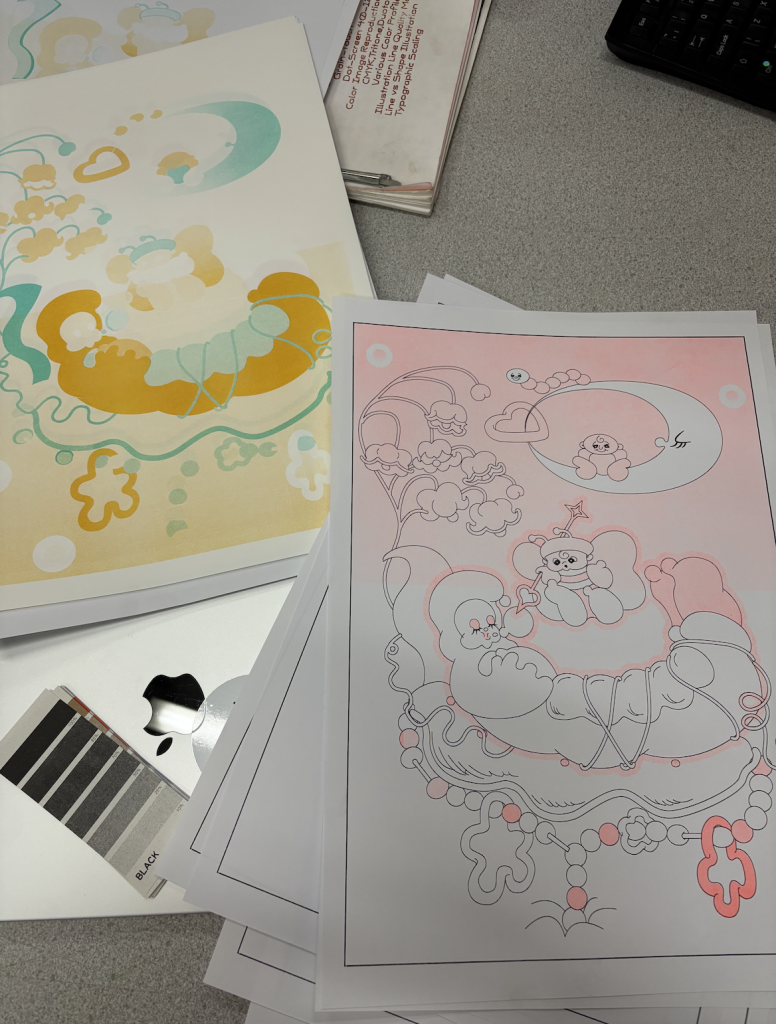
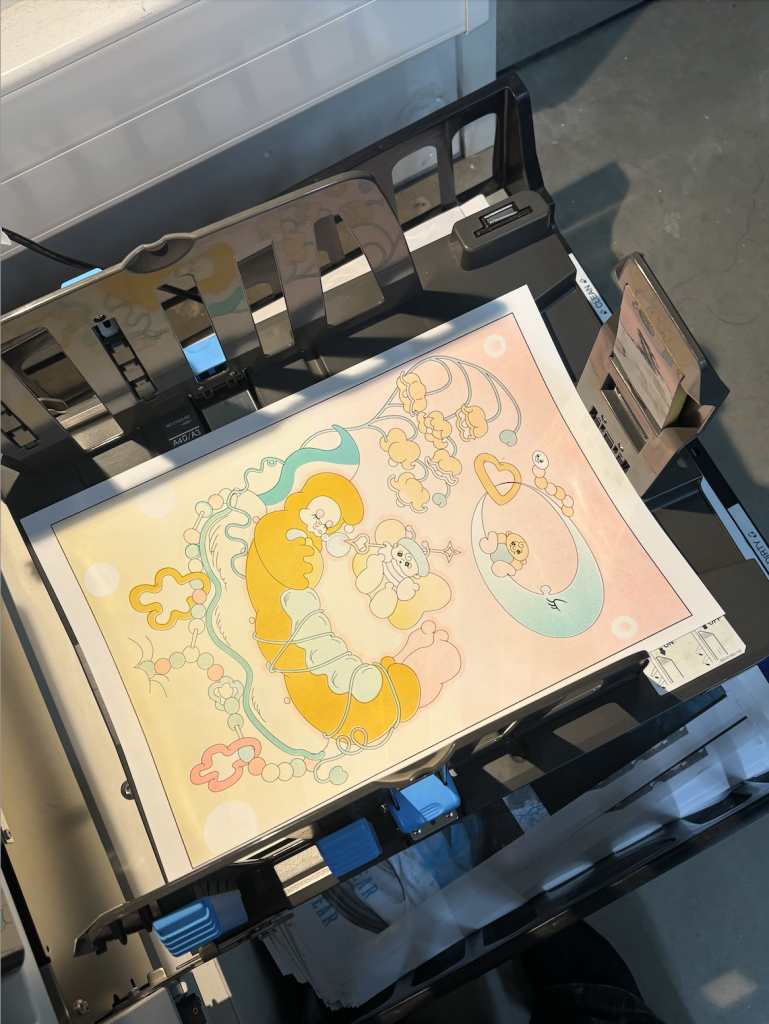
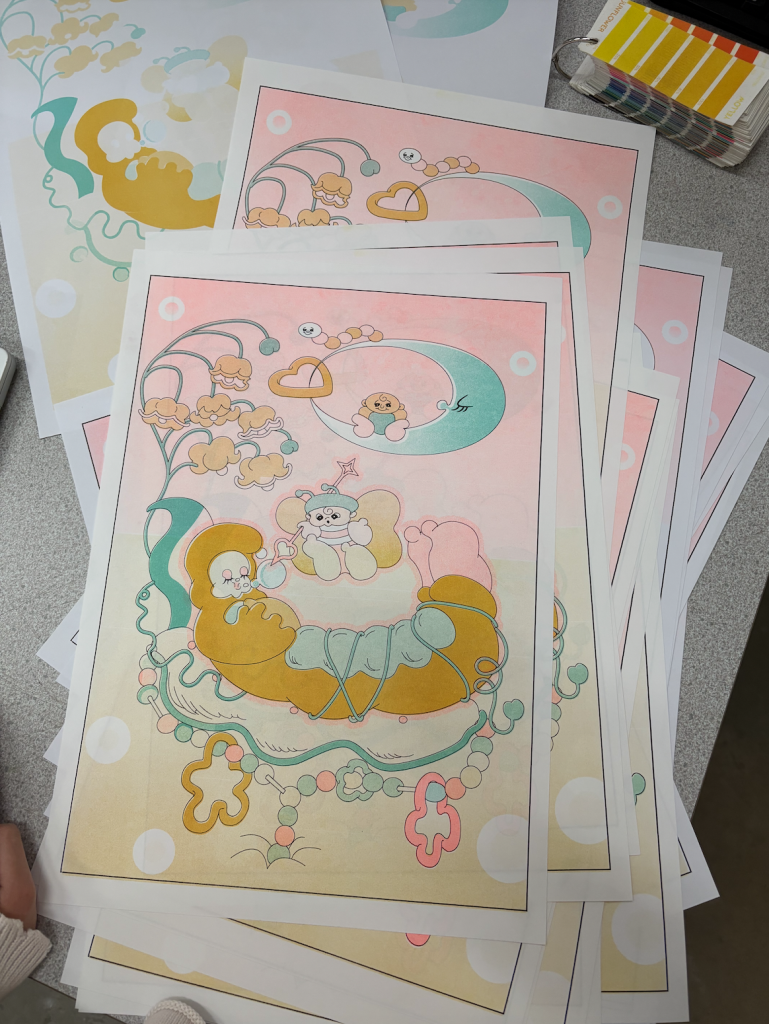
I think part of the excitement came from surrendering control. During colour separation, everything felt clinical and calculated, but once the printing starts, i was no longer zooming in at 400% fixing tiny edges; watching ink hit paper was letting the machine do its thing — accepting slight misregistrations, tiny shifts, and the unpredictability that gives riso its character.
Also, Anna the technician was super kind and patient! She explained the mechanics of the machine to me , how each drum works, why alignment shifts happen, how ink density affects the outcome, in a way that made it feel less intimidating and more collaborative. Instead of the machine being this mysterious industrial beast, it started to feel like something I could learn to negotiate with.
That being said, I’m not sure if this experience made me fall in love with the process.
I loved the moment of recombination and watching the layers come together. I loved the tactility of ink on paper and the slight unpredictability. But, the labour of separation — the meticulous digital slicing — still lingers in my mind. I can’t tell yet whether the satisfaction outweighs the tedium, or whether I’m drawn more to the result than the method itself.
Leave a Reply