once the script existed, the obvious question was what would happen if someone actually performed it, and their face/body transformed alongside the script in real time. I wanted to show the person sitting in front of the vanity turning into light as I did in my experiments and publication.
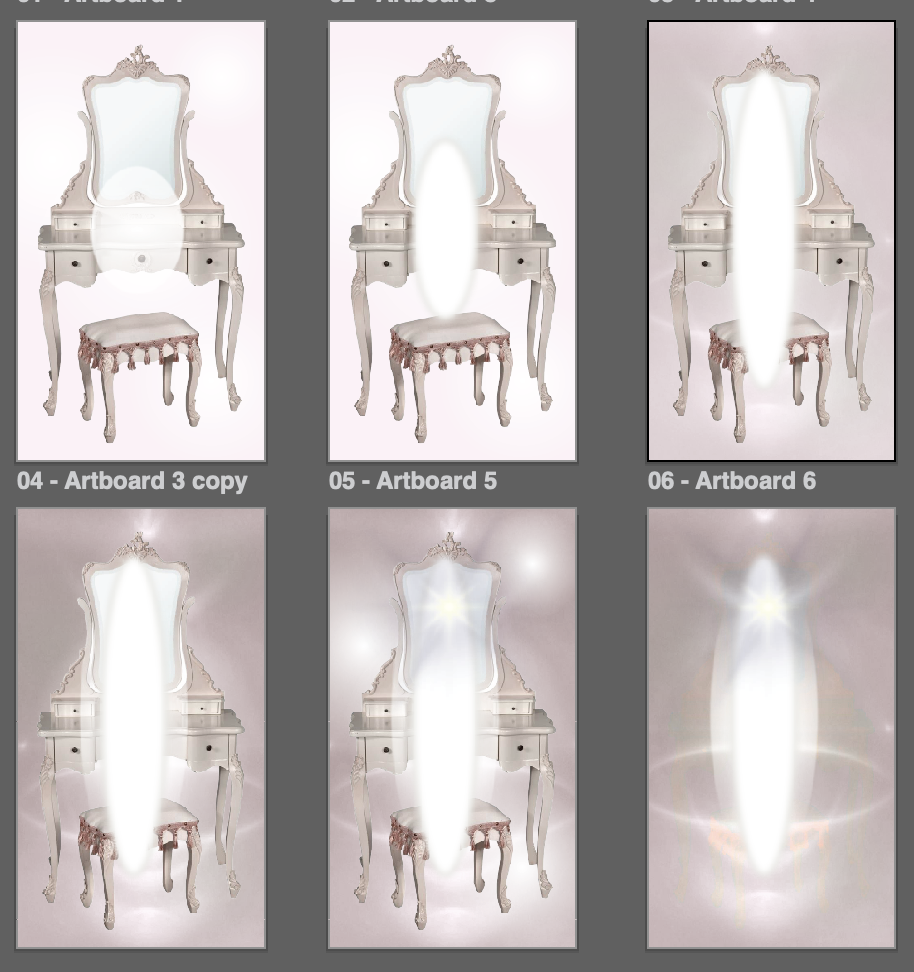
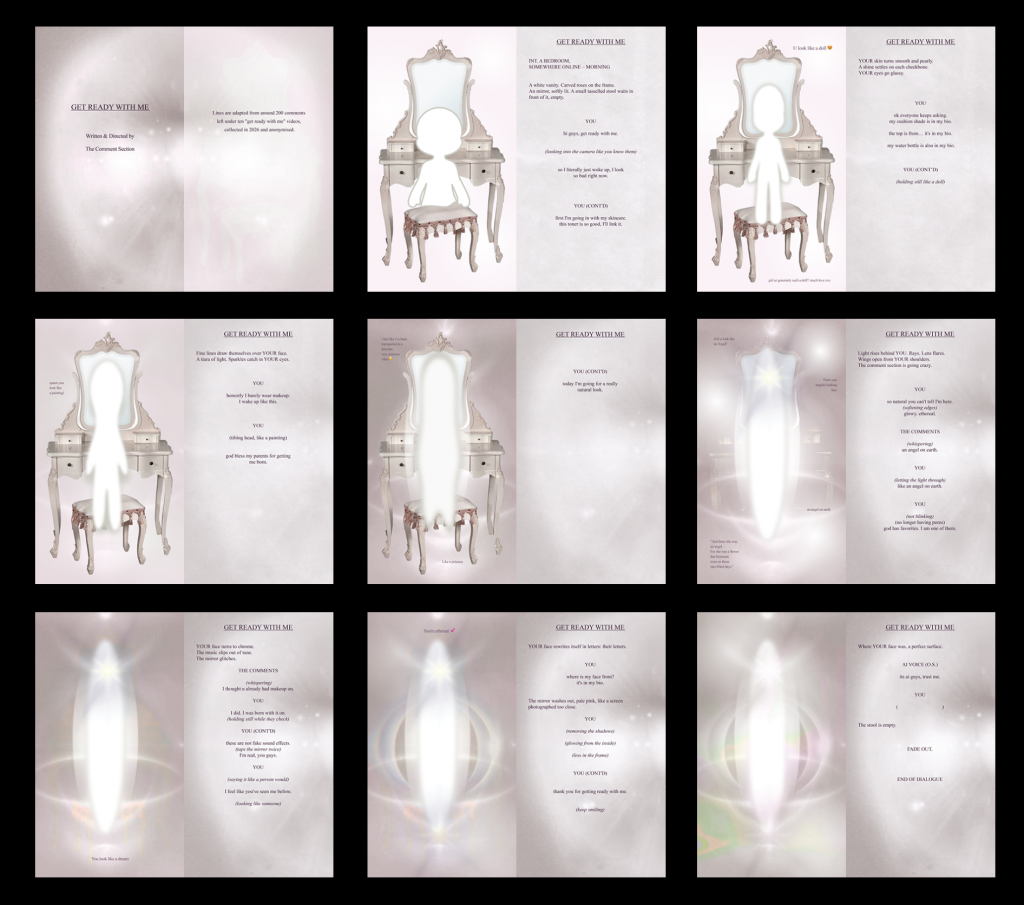
I therefore landed on the mirror.
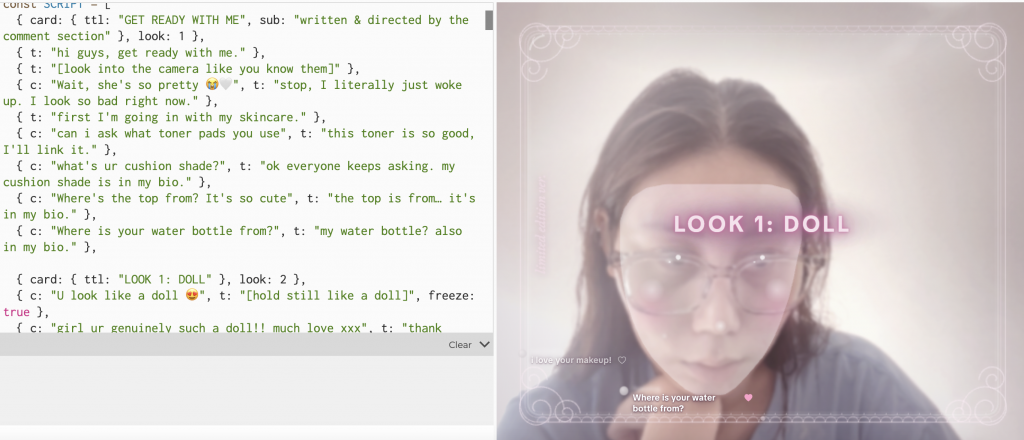
The mirror, or ‘get ready with me,’ is a p5.js sketch that uses face tracking, so the effects follow my face as I move. The script runs on a teleprompter at the top of the screen, close to the camera lens, where a creator would look while filming. Comments type themselves into a band along the bottom, with blurred names and small grey avatars so no single viewer stands out. I perform it myself, live.
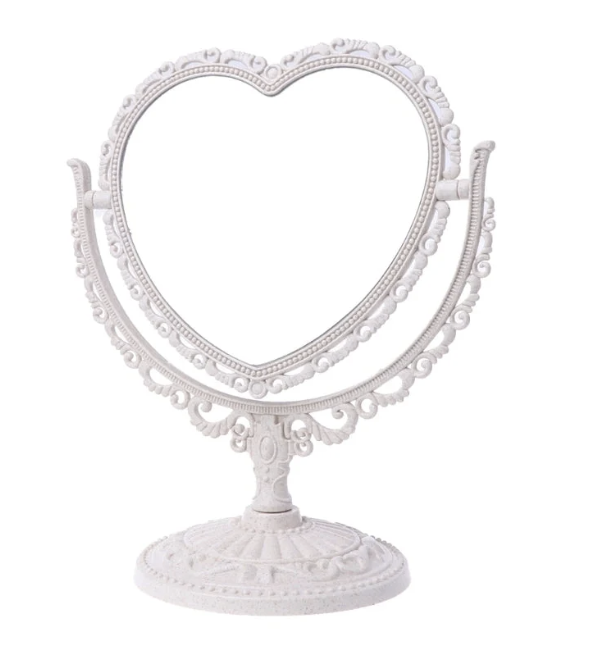
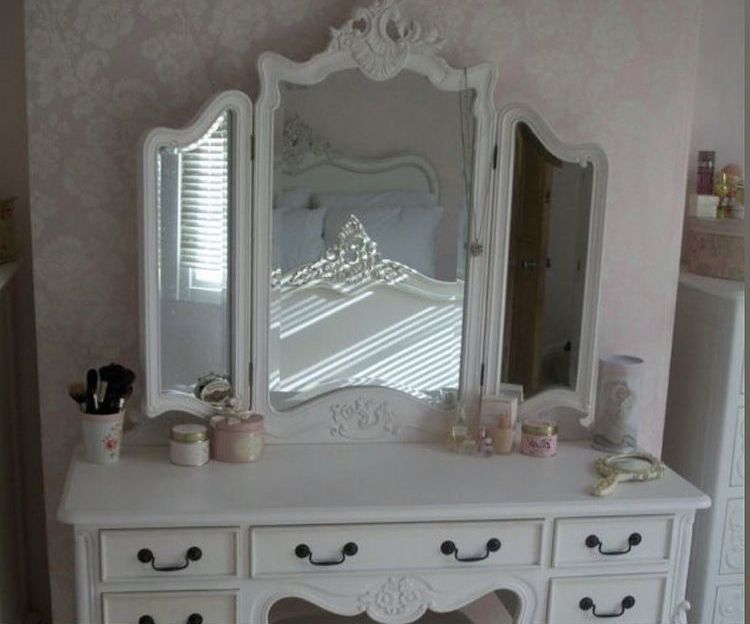
I was inspired by the ornamental frames of vanity mirrors and decided to create a simplified version for the web:
The mirror went through many many iterations, shaped by feedback and by testing it on myself. I experimented with the pacing of the comments, the fonts (i dislike tiktok sans but i will commit to it for the bit), the way each girl character is visually represented, the transitions between each stage, the teleprompter, whether the comment section is visible or hidden, and the AI voice.
Version 1: https://editor.p5js.org/kimitoh/full/6wdfEc3ai
Version 2: https://editor.p5js.org/kimitoh/full/gAQRrglpg
Version 3: https://editor.p5js.org/kimitoh/full/LfMLL8sLP
Version 4: https://editor.p5js.org/kimitoh/full/VGCTnmQx4
A few of these changes taught me the most.
The teleprompter: in the first version, it was not clear that the script at the top of the screen was a teleprompter. i therefore tried to highlight the script letter by letter, like karaoke. Reading it gave me motion sickness, so I switched to word-by-word: a small heart glides under the line, and each word swells slightly as I say it. The first font was too bold and too neon, and I didn’t like how wide it was. I settled on TikTok Sans at a lighter weight in pale pink, so the lines I speak are literally in the platform’s own voice. The stage directions are in EB Garamond italic, the voice of a printed script.
The comment section: The first version had no comment section on screen at all, and nothing linking the comments to the script. In feedback, people found it hard to tell that the teleprompter was responding to anything. It just looked like I was reading lines. So I added a band along the bottom where comments type themselves in, and a small heart that flies from each key comment’s like icon up into the line I’m about to say. Now you can see the comment arrive first and the script follow, which is the argument of the whole piece in one gesture.
The doll: I first gave the doll a bow and a price tag, but they looked like stickers placed on top. I tried a clear blister pack moulded around my head and a die-cut toy box, and neither worked. In the end I stripped it back to a glossy plastic sheen moving across the frame, and a freeze on “[hold still like a doll]”.
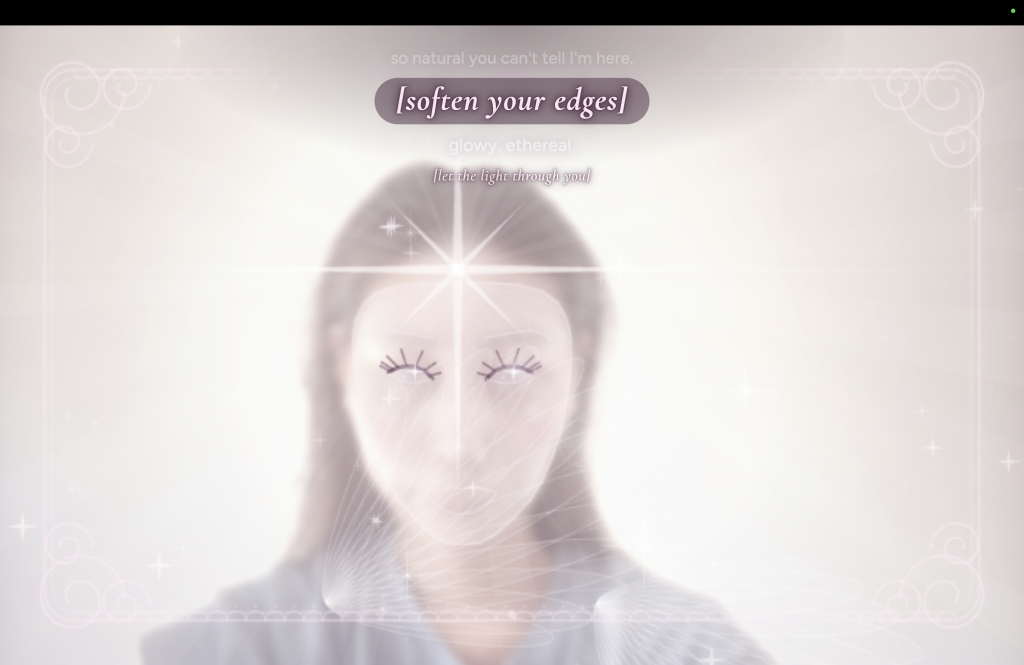
The angel: The early angel had lens flares and wings, but body tracking proved a little bit hard with everything else going on, so I replaced them with a ring light that slowly overexposes my skin until “[stop having pores]” smooths what’s left. A ring light is the halo that actually exists in a GRWM creator’s bedroom. I also tested a cold blue-silver grade, but reverted it to keep my mauve palette constant across every piece.
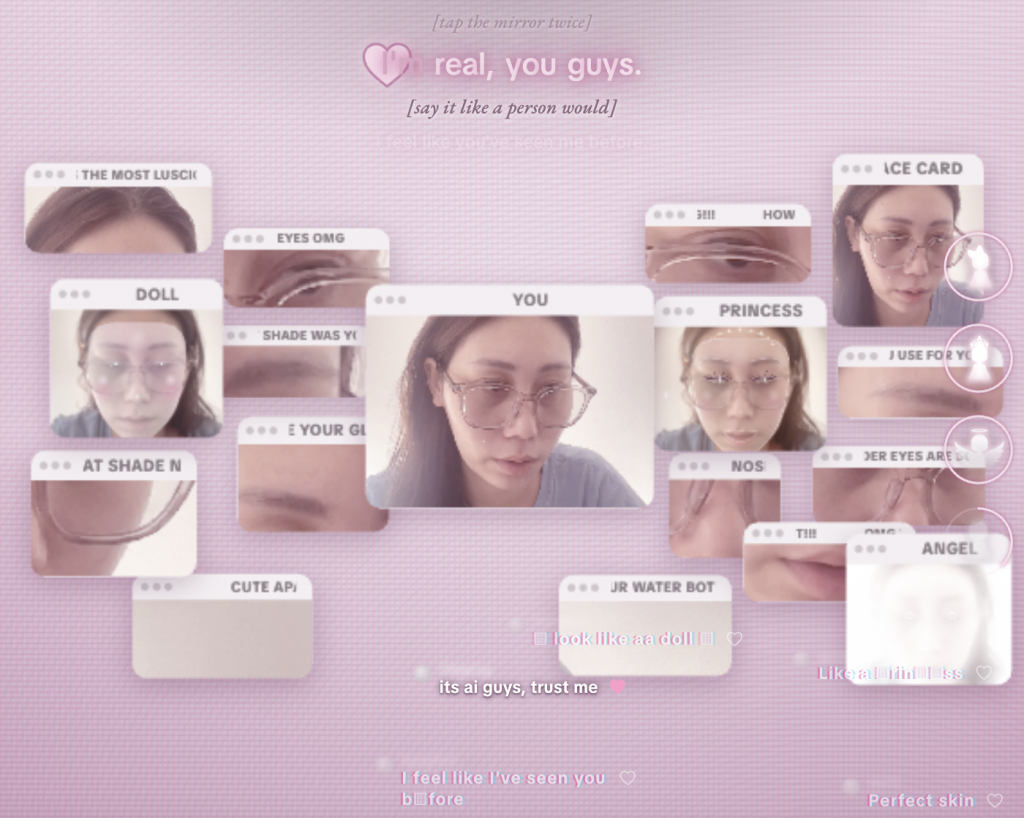
The AI: My first version of the final look had words running across my face while the image glitched. It read as a generic “broken screen” effect, and it didn’t say anything specific about AI. I was then inspired by the visual style of Chia Amisola, whose work arranges floating browser windows into soft, ambient layouts, and started experimenting with pop-up windows. Now my reflection shrinks into a single window titled “YOU”, and more windows open around it, each showing one part of my face: an eye, the lips, the skin, my hair, even my water bottle. Each is titled with a real comment, like “ur eyes omg” or “love your glass skin, btw”. At “its ai guys, trust me”, every title changes to “AI”.
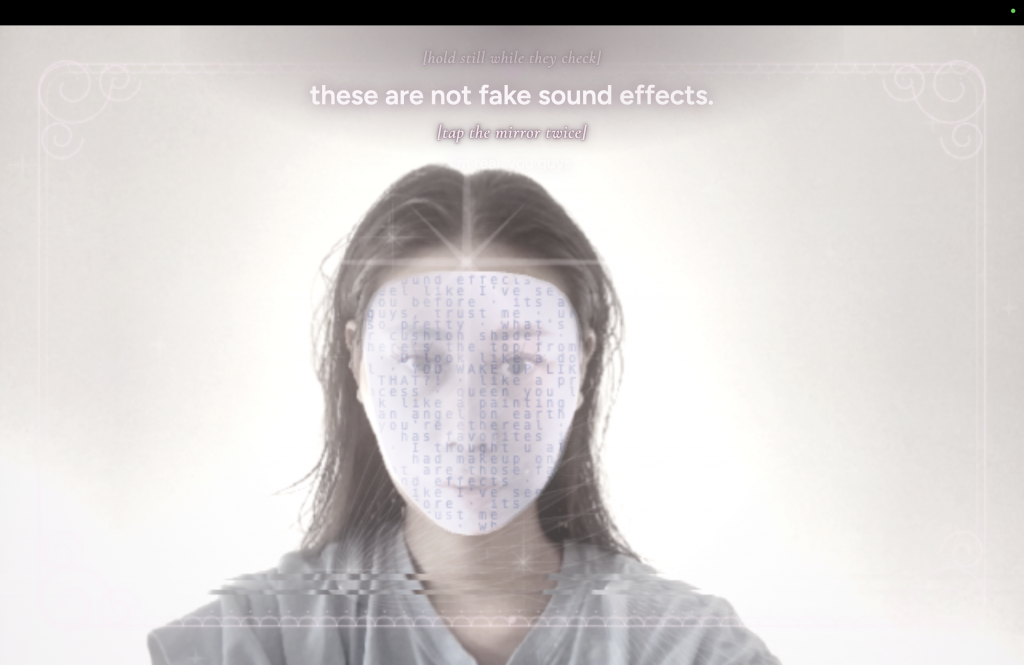
The windows make more sense for AI than the glitch did. A machine doesn’t see a face as a whole person. It breaks it into features it can detect and label, and my mirror’s face tracking does exactly that to me. The comments were already doing something similar: praising one feature at a time and asking where each part came from. The windows let those two ways of looking meet. My face is taken apart into labelled pieces, and then the labels themselves are replaced with one final verdict.
The transitions: Each look used to start with a title card: LOOK 1: DOLL, LOOK 2: PRINCESS. In a tutorial I was told this felt too abrupt and broke the flow. Now each transformation is triggered by a real comment. It only begins once the compliment has finished typing, and builds up layer by layer, while the previous look fades out underneath. Only the AI look still arrives as a hard cut.
Progress: It was suggested that I use the figure graphics I’d made for my writing. I first put them in a story-style bar across the top, but it crowded the teleprompter, so I moved them into a column down the right side, like TikTok’s like and share buttons. Each figure’s ring fills as its look builds, and at “its ai guys, trust me” every figure glitches into a pixelated AI version.

The voices: Each comment is whispered by the computer’s built-in voices, pitched up and kept quiet, while a lower, slower AI voice reads the opening title and the final line. At the symposium rehearsal, people kept talking about the “freaky voice” of the comments, and suggested using it for “its ai guys, trust me” as well. I liked that the audience’s response changed the ending. In a piece credited to the comment section, it feels right that the final verdict should sound like the crowd, not like a separate narrator.
Leave a Reply