translating comments into a script!
I chose the screenplay format because it’s a form in which someone else’s words tell a body what to do, and that felt like exactly what the comments i had collected were doing.
The title page credits the script to “The Comment Section”. The scene heading is “INT. A BEDROOM, SOMEWHERE ONLINE – MORNING”, and the characters are YOU, THE COMMENTS and an AI VOICE (O.S.). Writing “YOU” in capitals in the action lines (“YOUR skin turns smooth and pearly”) meant whoever read the script was cast in it.
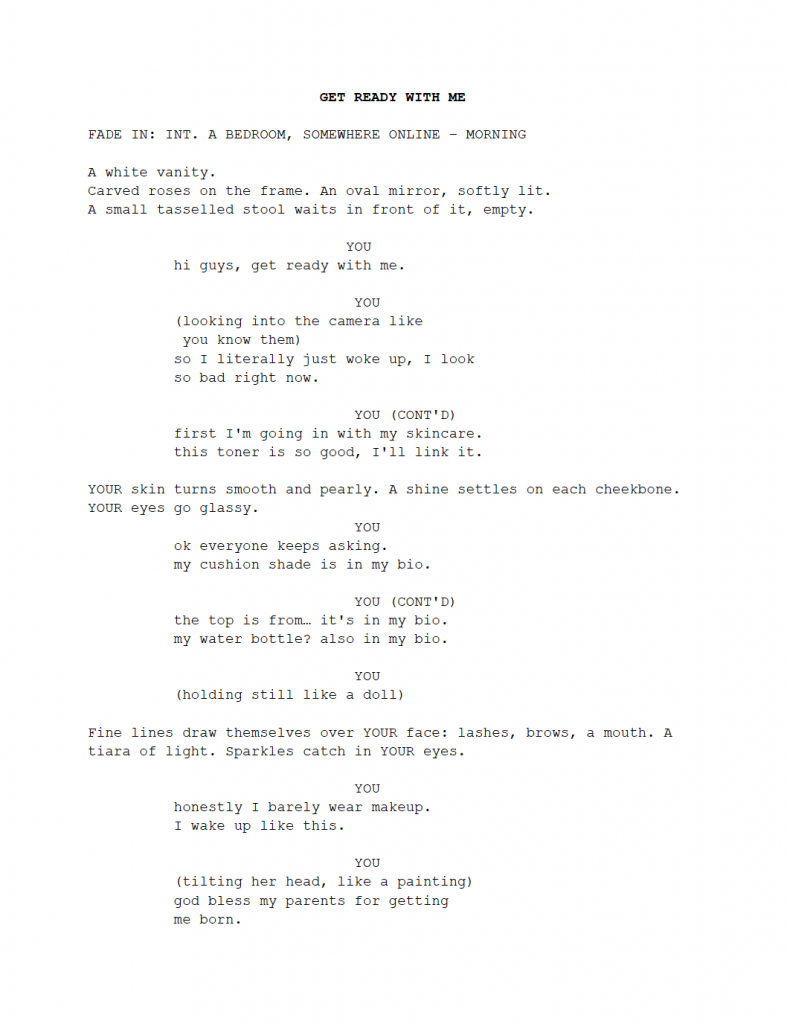
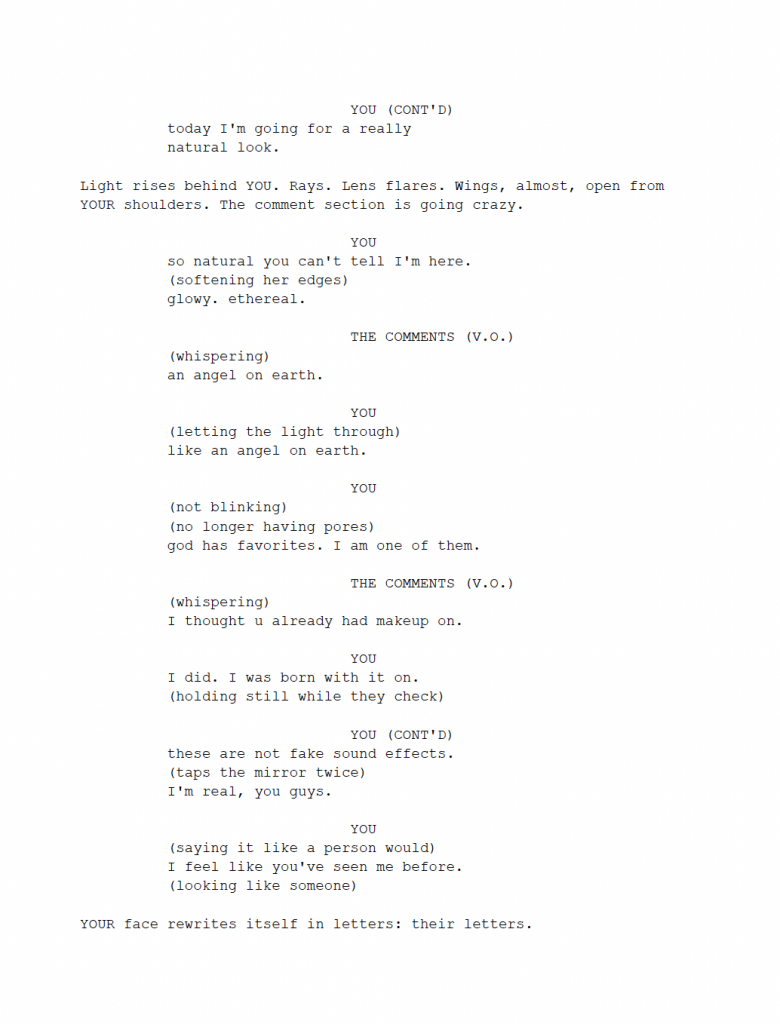
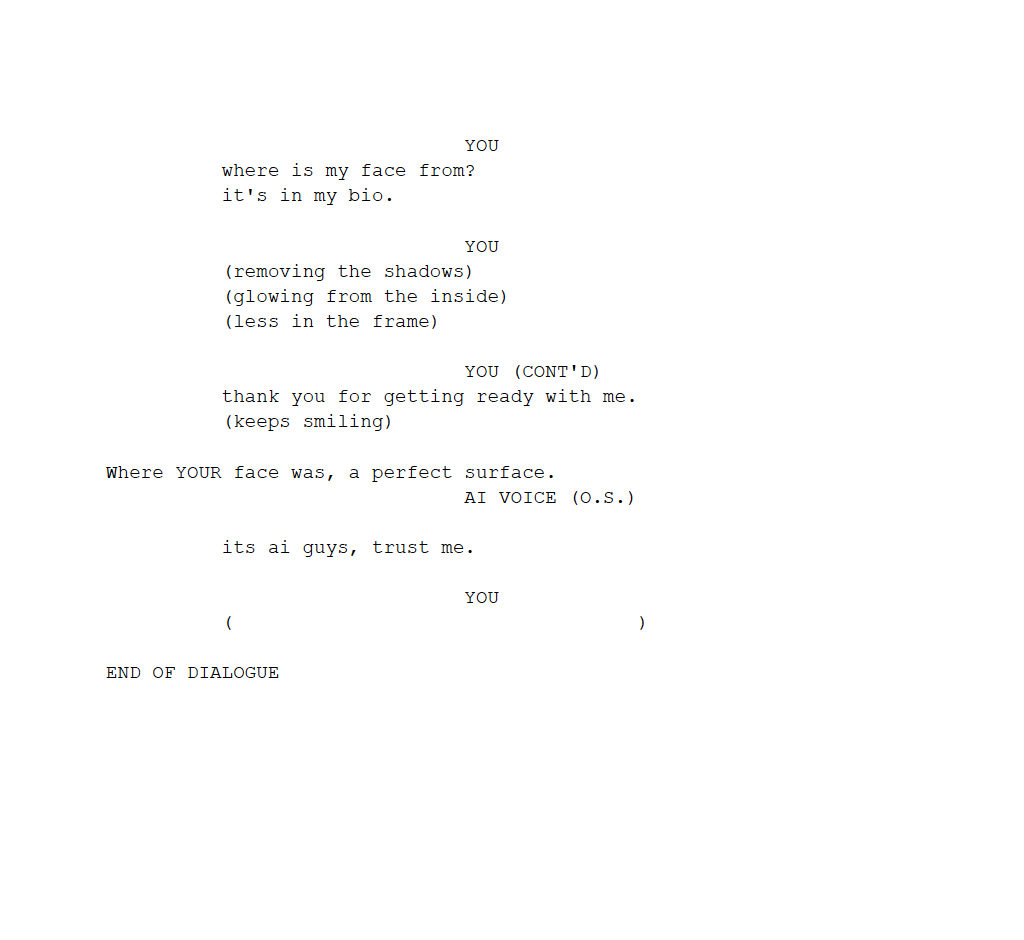
The most useful convention turned out to be the parenthetical, the small instruction under a character’s name about how to say a line. This is where a compliment could become a direction:
- “U look like a doll [heart eyes emoji]” became (holding still like a doll)
- “queen you look like a painting!” became (tilting head, like a painting)
- “an angel on earth” led to (no longer having pores)
Some comments became lines for YOU to say about herself. “God has favorites istg” became “god has favorites. I am one of them.” Moving a compliment into the first person was the most revealing change. Something that sounds sweet when it’s said about someone sounds strange, even demanding, when you have to say it about yourself.
I laid the script out as a publication, built from the visuals I had started with Afterimage. The script runs on the right-hand pages, and the faceless figure at the white vanity sits on the left. A few original comments float in the margins. Across the spreads, the figure slowly loses her outline, becoming smooth, then glowing, then an oval of light, until the last page says only “The stool is empty.” Her final line is a pair of empty brackets.
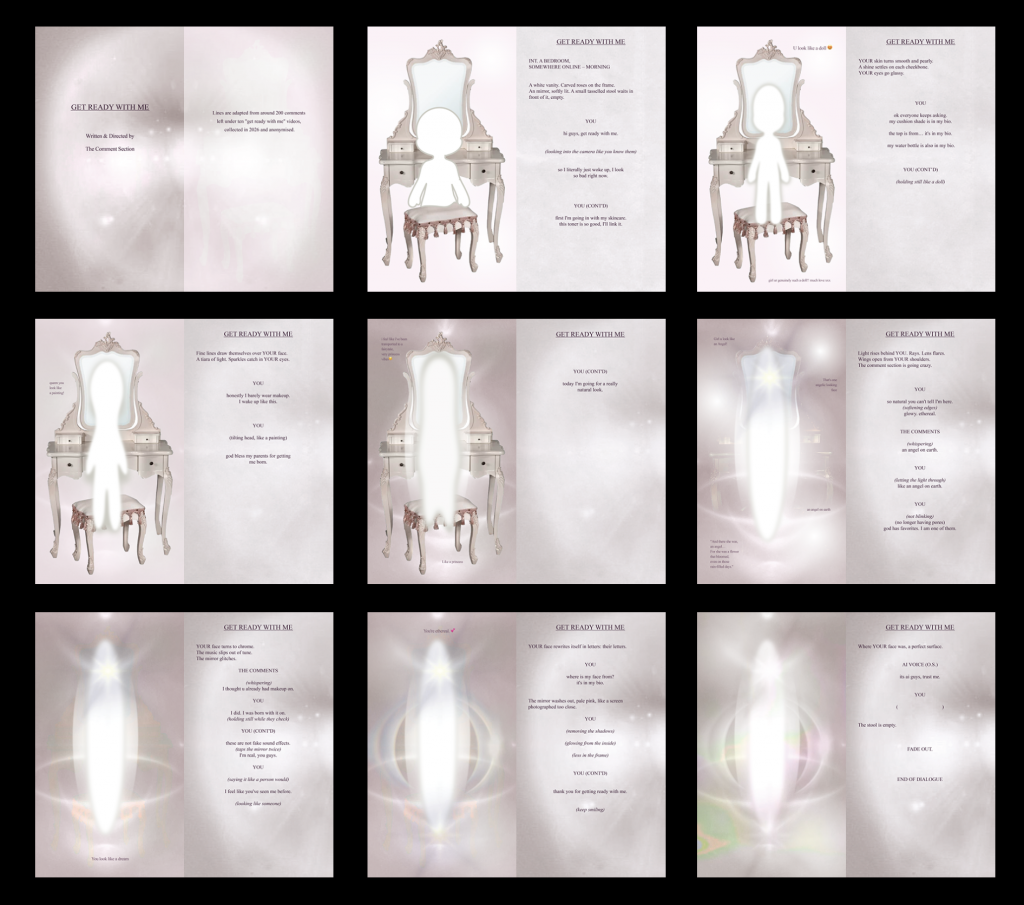
I kept the figure faceless from the first page. I didn’t want to draw a creator I had anonymised, and I wanted a placeholder that anyone could sit in.
Leave a Reply